
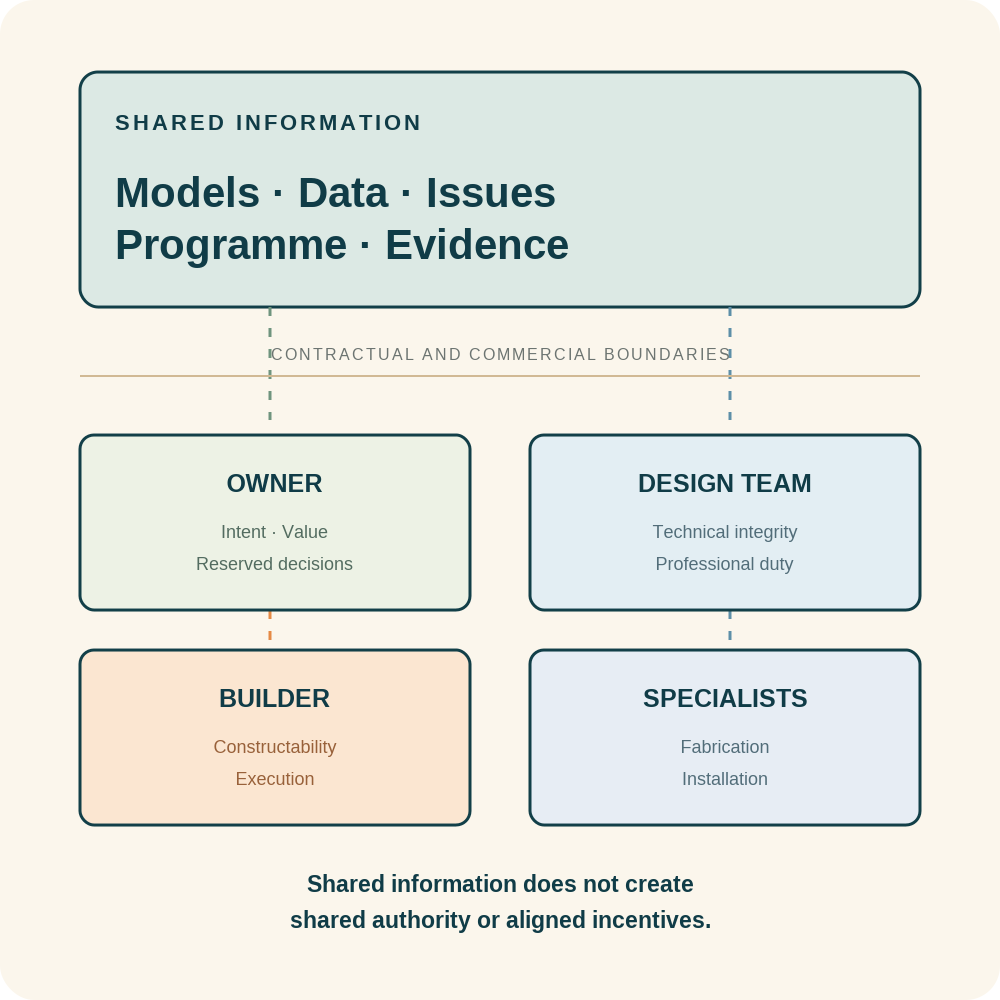
Digital delivery allows project participants to see the same problem earlier. It does not automatically give them a shared basis for resolving it.
Designers, builders, specialist trades and owners may work through connected models and common information environments while remaining separated by appointment, authority, liability and commercial interest. The technology can integrate the evidence without integrating the decision.
For an owner, the practical question is therefore not simply who should lead construction technology implementation. It is:
How can an owner organise leadership, governance and commercial risk so that shared information leads to timely project decisions?
This question matters whether a project uses traditional procurement, Design and Build, EPC, collaborative working arrangements or contractual Integrated Project Delivery. Each structure creates a different relationship between knowledge, control and risk. None can rely on technology alone to resolve that relationship.
The problem appears in the coordination meeting
Consider a multidisciplinary coordination review.
A federated model identifies a conflict between a structural element and a major building-services route. The information is available before installation, when the issue should be easier and less expensive to resolve.
But detection is only the beginning.
The design team must evaluate the technical implications. The builder must assess constructability, sequencing, access and programme consequences. A specialist trade may hold the most practical fabrication or installation knowledge. The owner may need to authorise a change if it affects cost, time, performance or the agreed brief.
The project must still determine who should lead the response, who can make the binding decision, whose information may be relied upon, who undertakes and pays for additional work, who carries responsibility if the resolution fails, and who receives the benefit of avoiding the downstream problem.
The technology has done its job: it has made the issue visible.
The project has not yet done its job: it has not turned visibility into accountable action.
The information is integrated. The organisations, authority and commercial incentives are not.
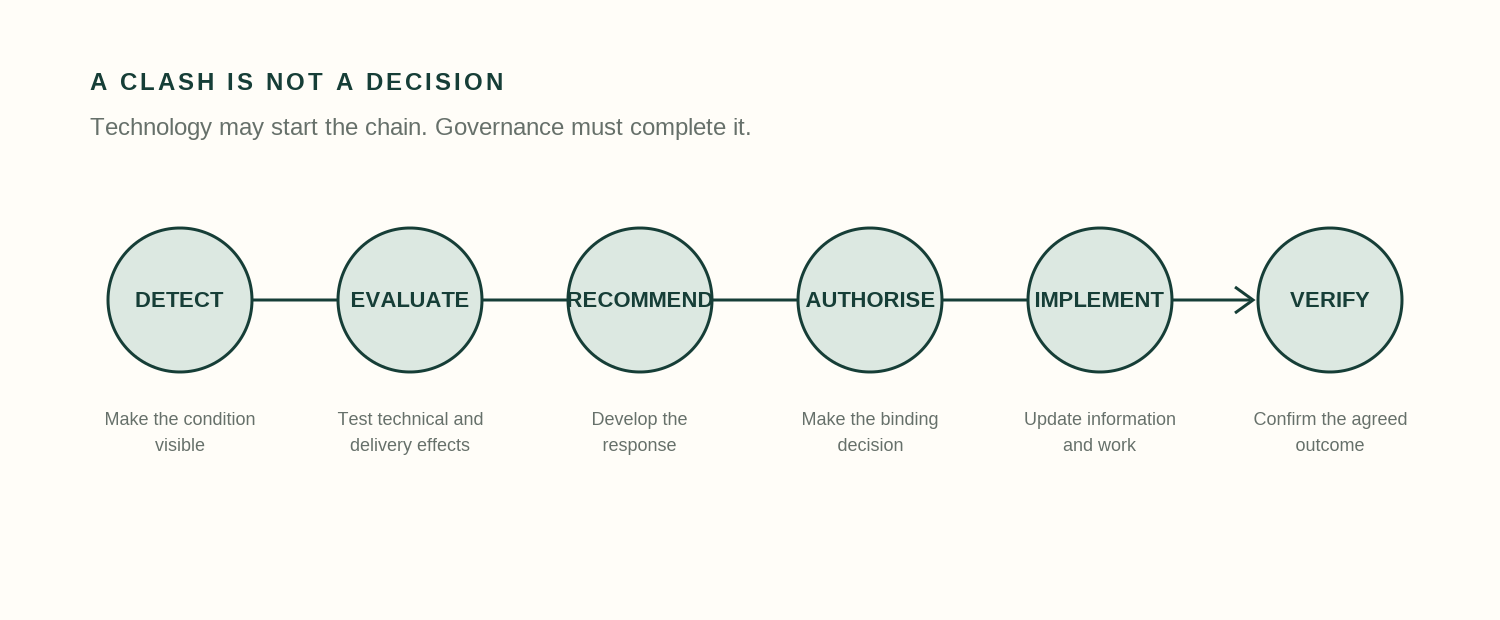 Figure 1. A clash is not a decision. Technology may start the chain; governance must complete it.
The same information serves different purposes
The owner, design team, builder, specialist trades and operator may use the same information, but they do not use it for the same purpose.
The owner sets the intent: desired outcomes, information requirements, investment priorities and decision rights.
The design team safeguards design integrity: technical performance, multidisciplinary interfaces, coordination and information quality.
The builder connects information to execution: constructability, procurement, sequencing, logistics, installation and verification.
Specialist trades and fabricators translate design intent into package-level production and installation information.
Operators and facility teams determine whether project information remains useful for maintenance, replacement, compliance and asset management after handover.
These are functions, not exclusive territories. Their importance changes with the issue, the project stage and the delivery model.
A structural designer may lead a technical assessment. A builder may lead the sequence analysis. A specialist trade may lead the fabrication response. The owner may retain approval of the consequential change.
Leadership can move with the problem. Authority and accountability cannot be left ambiguous.
The questions hidden inside every digital issue
| Question | What it establishes |
|---|---|
| Who should lead? | The party with the knowledge and position to guide the activity |
| Who can decide? | The person or governance body with binding authority |
| Who performs the work? | The party responsible for producing information or taking action |
| Who ensures completion? | The party accountable for reaching the required outcome |
| Who carries liability? | The party legally responsible if an obligation is not fulfilled |
| Who bears commercial exposure? | The party whose cost, fee or profit is affected |
| Who receives the benefit? | The party gaining value from the improvement |
These roles may align. They should never be assumed to be the same.
Identifying an issue does not confer authority to approve its resolution. Operating a platform does not make its administrator responsible for the technical content within it. Participating in coordination does not transfer every design or construction liability to the group.
Why shared information still produces slow decisions
The recurring problems can be traced to three forms of fragmentation.
Knowledge arrives at the wrong time
Projects appoint participants according to contractual stages. Decisions, however, do not always respect those stages.
Builders and specialist trades may be appointed after consequential design decisions have been made. Operators may be consulted when handover information is already being compiled. The people able to prevent a problem arrive when their knowledge can only correct it.
Early detection then becomes misleading. A model may reveal an issue early in construction while the opportunity to prevent it economically passed during design.
Authority sits apart from the problem
The people closest to an issue may lack the authority to decide it. The authorised person may be outside the working discussion or may not receive the evidence in a form that supports a timely decision.
This separation creates repeated reviews, deferred approvals and informal workarounds. Decisions are revisited because the people developing the solution, carrying the consequences and approving the outcome were never brought together at the right time.
Effort, risk and benefit fall in different places
Better information has a cost. It requires production, review, coordination, validation and maintenance.
The design team may carry additional coordination effort. The builder may avoid rework. A specialist trade may gain fabrication certainty. The owner may receive improved programme confidence and more usable asset records.
The party paying for the improvement may not capture its principal benefit. A mandate alone cannot align those incentives.
This is why technology initiatives struggle even when every participant appears committed. The difficulty is not necessarily unwillingness. It is that organisational and commercial structures distribute effort, authority, exposure and value differently.
Common practices help—but do not resolve the structure
Projects use several familiar measures to improve digital delivery. Each has value. None, by itself, resolves the relationship between knowledge, authority and risk.
Appointing a BIM or digital lead
A capable lead can coordinate requirements, information exchange and issue management. That role cannot replace the professional judgement of the design team, the production knowledge of the builder, the expertise of specialist trades or the approval authority of the owner.
“Lead BIM” is particularly unhelpful when it does not distinguish information management, technical coordination, construction integration, model production, system administration and decision authority.
Preparing a BIM Execution Plan
A BIM Execution Plan can organise information production, coordination, exchange, review and delivery. It cannot allocate every commercial risk, change professional responsibility or govern every digital initiative used on the project.
Reality capture, AI-assisted review, site monitoring, robotics or automated inspection may introduce questions of evidence, security, reliance, validation and liability that require governance beyond the BEP.
Implementing a common data environment
A common data environment can control information status, permissions, revision and exchange. It does not decide whether a proposed technical change is acceptable, whether additional cost is authorised or whether a party may rely on information for fabrication.
A single source of information is not a single source of authority.
Increasing coordination and clash detection
More coordination can reveal more issues. Without ownership, response periods and escalation, it can also create a larger register of unresolved problems.
Clash counts measure detection activity. They do not necessarily measure decision quality, prevented rework or installation readiness.
Mandating collaboration
A requirement to collaborate may influence behaviour, but it does not automatically align fee, profit, liability or decision rights.
Collaboration remains fragile when parties are asked to optimise the project while their appointments reward them for protecting only their own scope.
Integration has several dimensions
Digital integration normally begins with information. Project performance depends on whether the surrounding dimensions support its use.
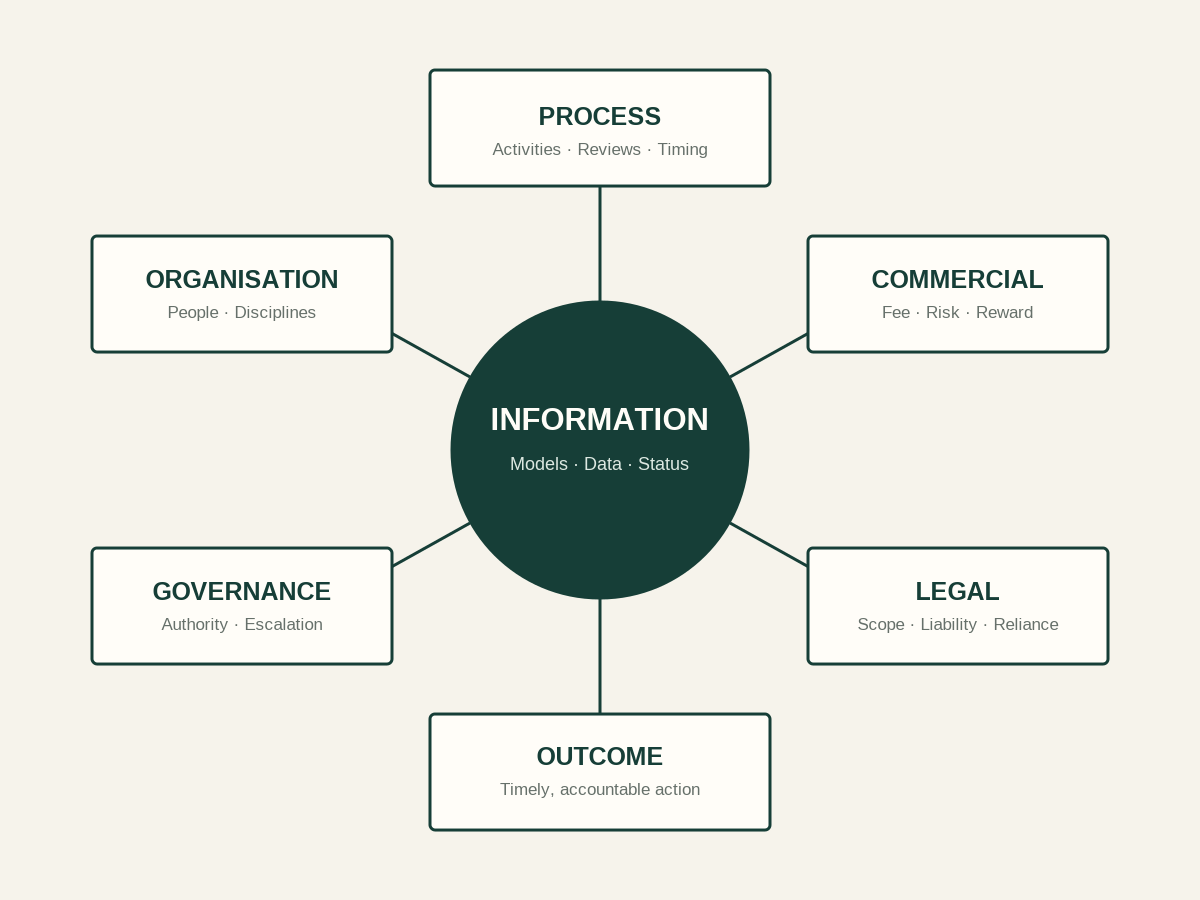 Figure 2. Information creates visibility. Process, organisation, governance, commercial and legal integration determine whether the project can act.
| Dimension | What must be connected |
|---|---|
| Information | Models, data, documents, status and permitted reliance |
| Process | Activities, dependencies, reviews and decision timing |
| Organisation | The people and disciplines required for the decision |
| Governance | Leadership, authority, accountability and escalation |
| Commercial | Cost, fee, profit, incentive and benefit |
| Legal | Scope, responsibility, liability, insurance and intellectual property |
Not every project needs maximum integration across every dimension. The appropriate level depends on complexity, uncertainty, interdependence and the consequences of delay or failure.
What matters is coherence. If the project expects integrated behaviour, its governance and commercial structure must make that behaviour possible.
Delivery structures produce different answers
The contract type does not determine every digital responsibility. Actual responsibilities depend on the scope, timing of appointment, information requirements and project-specific allocation of authority. The delivery structure nevertheless changes the environment in which shared information is used.
| Delivery structure | Primary integration mechanism | Continuing challenge |
|---|---|---|
| Traditional design-bid-build | Managed interfaces between separate appointments | Knowledge and decisions may cross slow contractual boundaries |
| Design and Build or EPC | Wider responsibility consolidated through the builder | Consolidation does not necessarily align every interest or protect lifecycle value |
| Early involvement and collaborative practices | Earlier knowledge and shared working methods | Behaviour may improve while authority and commercial exposure remain separate |
| Contractual IPD | Joint project governance with selected shared risk and reward | Requires owner readiness, transparency and deliberate commercial design |
Traditional delivery: coordinated information, divided control
Under traditional delivery, the owner appoints the design team and later appoints the builder. The arrangement can provide clear professional and contractual boundaries. It can also delay construction and specialist input until substantial design decisions have been made.
BIM may improve design coordination and subsequent construction planning, but it does not remove the separation between appointments.
The design team continues to lead design information and technical judgement. The builder leads construction planning and execution. The owner retains its approvals. Information and decisions must cross the interfaces between them.
Traditional delivery can support effective digital coordination when those interfaces are deliberately governed through clear requirements, reliance conditions, response periods, acceptance criteria, change processes and escalation routes.
Design and Build or EPC: consolidated responsibility
Design and Build can give the builder wider responsibility for design and construction. EPC may extend that consolidation across engineering, procurement, construction and defined performance obligations.
This can connect design development more closely to procurement, specialist input and execution. It creates a clearer centre of integration, but not necessarily shared governance.
The owner must still define outcomes, preserve appropriate review rights and ensure that information remains useful beyond contractual completion. Designers continue to exercise professional judgement within a different commercial relationship. Specialist knowledge can still arrive too late if key participants are not appointed early.
Consolidated responsibility is not the same as aligned interest.
Early involvement and collaborative practices
Early contractor involvement, partnering, Lean planning, co-location, structured workshops and shared performance measures can improve collaboration under several procurement routes.
These practices can introduce relevant knowledge earlier and create more reliable working relationships. Their limitation is that project behaviour may become collaborative while commercial and legal structures remain conventional.
That does not make them ineffective. It means the owner should understand which dimensions have been integrated and which remain separate.
IPD as one structural response
Integrated Project Delivery goes beyond exchanging coordinated information or encouraging cooperative behaviour. It creates a project-level organisational and commercial structure involving the owner, principal designer, builder and selected key participants.
The participating companies retain their identities and defined responsibilities. For the project, however, they operate through governance and commercial arrangements intended to support collective outcomes.
IPD commonly includes:
- early involvement of participants whose knowledge materially affects the project;
- jointly defined project outcomes;
- joint validation of scope, cost, programme and risk;
- multidisciplinary teams organised around project systems or problems;
- shared project governance;
- transparent financial information;
- commercial risk and reward linked to collective performance;
- agreed escalation processes;
- project-specific treatment of liability and insurance.
Shared leadership does not mean blurred authority
An integrated team can allow leadership to move to the person or group best equipped to address a particular issue.
The designer may lead technical development. The builder may lead production planning. A specialist trade may lead fabrication or installation strategy. The owner may lead decisions concerning value, operational outcomes or reserved approvals.
The project must still define which teams develop recommendations, which governance body approves them, which matters remain reserved for the owner and how unresolved decisions are escalated.
IPD replaces neither expertise nor authority. It reorganises how they meet.
Shared commercial risk is not universal shared liability
Selected participants may place an agreed portion of profit at risk against collective project performance. If agreed outcomes are achieved or exceeded, they may preserve or increase that profit. If the project underperforms, some or all of the at-risk amount may be reduced.
The intention is to make the success of the whole project commercially relevant to its major participants.
This does not mean every firm must join the risk pool. It does not mean every cost is at risk. It does not make every participant liable for every other participant’s work.
Professional duties, statutory obligations, warranties, insurance conditions and exclusions remain separately defined. Some claims or liabilities may be limited or waived through project-specific agreements, but that requires deliberate legal and insurance design.
A party should not have its commercial outcome materially affected by decisions it cannot influence.
Participants exposed to collective performance require timely information and meaningful influence over the decisions shaping that performance.
IPD is not the only answer
IPD may be appropriate where complexity, uncertainty and interdependence make early specialist knowledge and collective optimisation particularly valuable.
It also demands more from the owner. The owner must participate in governance, make timely decisions, share relevant information and work with greater commercial transparency. An owner that wants shared risk while retaining slow or unilateral control can undermine the model.
Simpler projects may achieve sufficient integration through clearer appointments, earlier involvement and disciplined governance. The question is not whether every project should adopt IPD. It is whether the selected delivery structure can support the decisions the project requires.
The DECIDE framework for owners
Owners can use the following framework for any digital initiative, regardless of procurement route.
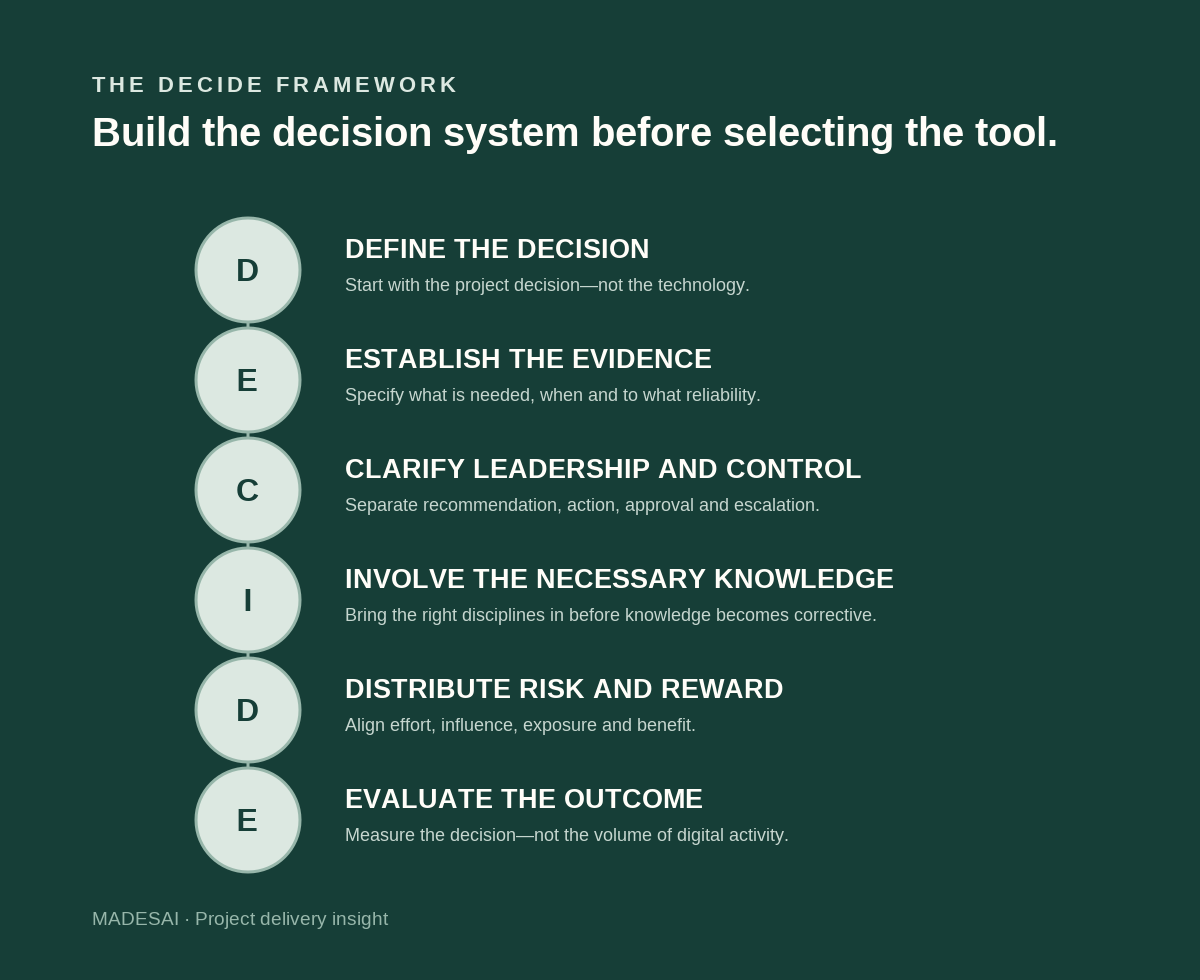 Figure 3. Build the decision system before selecting the technology.
D — Define the decision
What decision, approval, coordination activity or verification should improve?
Do not begin with “use BIM,” “implement a platform” or “create a digital twin.” Begin with the project decision that currently suffers from late, incomplete or unreliable information.
Implementation action: State the decision, its owner and the consequence of delay or error.
E — Establish the evidence
What information is required to make that decision? When is it needed? Who produces it? What makes it sufficiently reliable for the intended use?
Implementation action: Define the required evidence, delivery point, status, review method and acceptance condition.
C — Clarify leadership and control
Who should lead the analysis? Who performs the work? Who has binding authority? Who remains accountable for closure?
Implementation action: Record recommendation, approval and escalation rights separately rather than assigning a general “digital lead.”
I — Involve the necessary knowledge
Which owner representatives, designers, builders, specialists and operators must participate? At what point can their knowledge shape the outcome rather than merely correct it?
Implementation action: Align appointment timing and meeting participation with the actual decision sequence.
D — Distribute risk and reward
Who incurs the effort? Who controls the risk? Who receives the benefit? Does the commercial arrangement recognise that distribution?
Implementation action: Test whether scope, fee, incentives, liability and decision influence are reasonably aligned.
E — Evaluate the outcome
Did the initiative improve decision time, constructability, cost, programme, quality, safety, certainty or operational usability?
Implementation action: Measure the outcome of the decision rather than the volume of digital activity.
From framework to implementation
The framework becomes useful only when embedded in the project lifecycle.
Before procurement
- Identify decisions repeatedly affected by poor information.
- Determine which dimensions of integration those decisions require.
- Assess whether the owner can provide timely, internally aligned decisions.
- Select a delivery structure proportionate to project complexity and interdependence.
- Identify which participants must contribute earlier than they traditionally would.
During appointment
- Define outcomes and information acceptance conditions.
- Allocate leadership, authority, responsibility and liability separately.
- Establish permitted reliance on shared information.
- Align scope and fee with the required production and review effort.
- Define response periods, change controls and escalation routes.
- Where IPD is used, define governance, target validation and risk/reward participation.
During mobilisation
- Test the complete decision workflow using realistic project scenarios.
- Confirm information access, status and approval permissions.
- Verify that issues can move from identification to authorised resolution.
- Confirm that site and operational participants can use the proposed information.
During delivery
- Monitor decision time, unresolved constraints and closure quality.
- Record assumptions, recommendations and approvals.
- Review whether commercial arrangements are encouraging the intended behaviour.
- Escalate recurring structural problems instead of repeatedly treating their symptoms.
At handover and review
- Test information against operational use rather than delivery volume.
- Compare intended outcomes with actual results.
- Identify where authority, incentives or interfaces delayed decisions.
- Carry lessons into future requirements, appointments and organisational standards.
Integration must be designed
Shared information creates the possibility of better decisions. It does not create the authority, incentive or accountability required to make them.
Traditional delivery can support digital coordination when its interfaces are carefully governed. Design and Build or EPC can consolidate responsibility. Early involvement and collaborative practices can introduce knowledge sooner. IPD can go further by restructuring project governance and aligning selected commercial interests.
None of these approaches removes the need for deliberate choices.
The owner must determine what decision needs to improve, whose knowledge is required, who should lead, who can authorise action, who controls and carries the risk, who funds the effort, who receives the benefit and how success will be measured.
A mandate cannot align incentives. A BIM Execution Plan cannot govern every digital initiative. Technology can make an issue visible, but only the project’s organisational, governance and commercial arrangements can turn that information into timely, accountable action.
Technology can integrate information. The project must integrate the decision.