
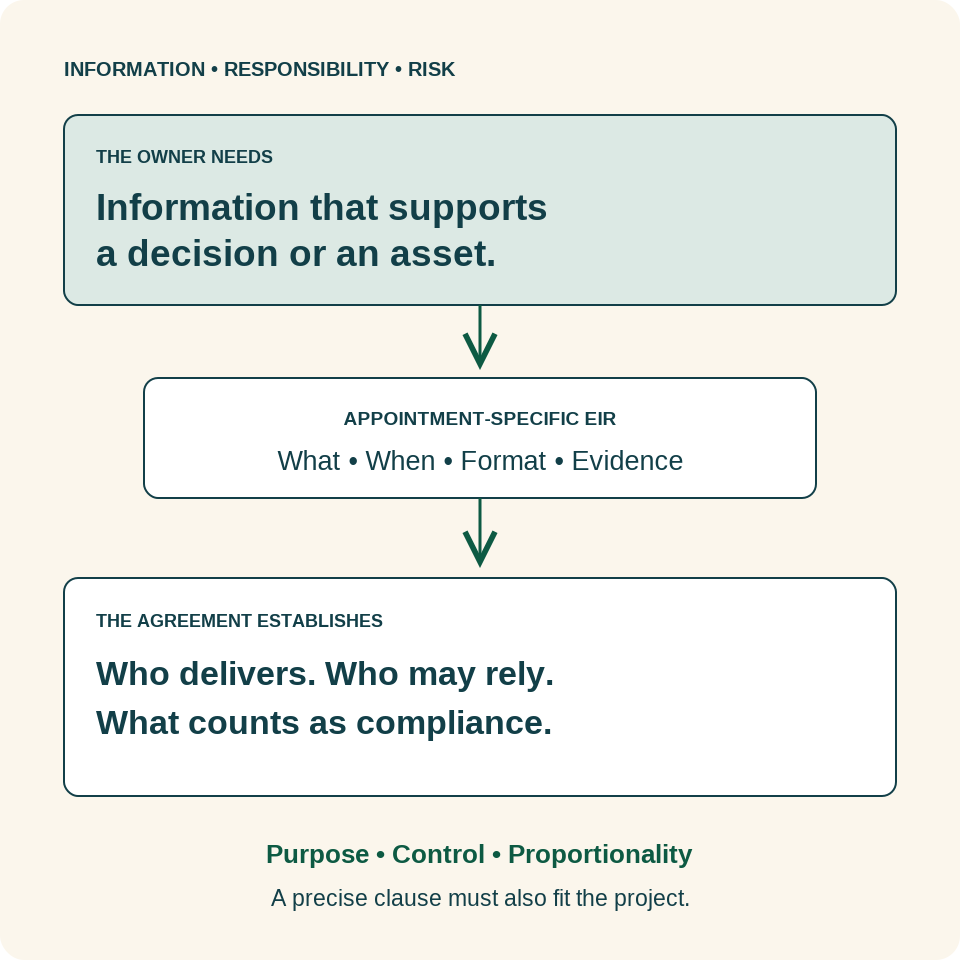
Construction contracts establish what project teams must deliver, what they can rely on and how the consequences of failure are allocated. Their information requirements therefore affect much more than the production of models. They influence tender prices, design decisions, procurement, construction and the usefulness of the records handed to the owner.
BIM requirements are sometimes added after the main scope and commercial terms have been developed. Where the organisation has limited BIM experience, or the tender is prepared in haste, a software instruction can stand in for a properly defined information obligation.
The owner may expect information ready for construction or operation. The tenderer may have allowed only for model production and coordination. Both can agree to the same wording while pricing different commitments.
For the people preparing appointments, the question is:
How do we translate the information a project needs into obligations that fit the selected construction contract?
This requires a connected sequence: establish the information need, define the exchange, select the relevant contractual provisions, allocate the duty and test the proposed wording. At each step, the requirement must be necessary, achievable and proportionate. A more demanding clause is not automatically a better one.
Why “use Revit and ACC” is not a BIM contract requirement
Consider the following illustrative tender clause:
The Contractor shall use Revit and Autodesk Construction Cloud and provide a coordinated BIM model.
It names tools and an output, but leaves the commitment incomplete. What must be coordinated? At which stage? For whose use? Can the model support procurement, fabrication or only a design review? Who checks it, and who can authorise changes arising from the review?
A team could follow the instruction and still produce information unsuitable for the owner’s intended use. The disagreement would concern the content and purpose of the obligation, rather than whether the named software was used.
Software requirements and compatibility
A software requirement can be justified. An extension to an existing facility may need compatibility with the owner’s maintained models and established platform. A particular workflow may depend on agreed software versions or specialist capabilities.
The contract should explain that constraint and address access, licensing, exchange quality and continuity. Where an equivalent method is permitted, its compatibility should be demonstrated.
Simply replacing product names with “any suitable software” does not resolve these matters. The improvement is to define the result and justify the constraints needed to achieve it.
Common BIM contract drafting failures
The same problem appears in requirements that sound more sophisticated. Technical terminology gives an appearance of precision while the scope or responsibility remains unclear.
| Drafting practice | Better approach | Where the proposed improvement can fail |
|---|---|---|
| Require one LOD across the entire model | Define geometry, attributes and documents by purpose, element and milestone | Excessive detail or premature attributes can create speculative work |
| Require a clash-free model | Identify tested interfaces, clearances, tolerances and authorised exceptions | A low clash count can conceal a single critical unresolved interface |
| Assign all coordination to the BIM Manager | Separate information management, technical coordination and decision authority | Fragmenting tasks without an integration duty leaves gaps between parties |
| Demand all native and open formats | Specify exchanges that support identified receiving uses | Multiple unused exports add cost without proving interoperability |
| Require owner approval of every submission | Match checks and approvals to the consequence of error | An approval process the owner cannot resource delays the work |
| State that the owner owns all digital information | Establish the rights needed for the intended use | Unnecessary transfers of background intellectual property may obstruct procurement |
These are drafting decisions, not universal rules. The appropriate level of detail, checking or control depends on what the information will be used for and what happens if it is wrong.
A further failure occurs between documents. An EIR may require an output that no appointment allocates. A delivery plan may propose work outside the priced scope. A general disclaimer may defeat the model reliance promised elsewhere. The complete contract must be checked, not just its BIM paragraphs.
First identify the form of contract
The starting point is the agreement being drafted and its existing allocation of responsibility.
There are three distinctions to keep clear. The delivery arrangement describes how design and construction are organised. The agreement identifies the parties contracting with each other. The selected standard or bespoke form provides the operative terms.
A design–build project, for example, may involve an owner–design-builder agreement, a design-builder–architect appointment and specialist subcontracts. Each needs its own information duties. A consolidated obligation in the first agreement cannot simply be copied into every downstream appointment.
AIA A141 is one example of a form addressing the owner–design-builder relationship within a wider document family. It is a useful reference for that relationship, rather than a universal construction agreement. AIA A141
| Delivery arrangement | Responsibility to examine | Implication for digital requirements |
|---|---|---|
| Design–bid–build | Separate design and construction appointments | Connect their exchanges without unintentionally transferring design duties |
| Design–build | Design and construction within the design-builder’s agreed scope | Require integration of its designers, specialists and subcontractors |
| EPC/turnkey | Engineering, procurement, construction and defined completion obligations | Connect engineering and supplier information to fabrication, commissioning and records |
| Construction management | Management services and separate works packages | Distinguish the manager’s coordination authority from each contributor’s duties |
| IPD or alliance | Express task allocation, joint governance and commercial arrangements | Fit information obligations to the actual decision and risk provisions |
| Design–build–operate | Delivery followed by an operational service | Define information maintenance and access throughout the contracted service |
A framework agreement introduces another level: common requirements may sit in the framework, while each call-off must identify the relevant scope, exchanges and project particulars.
The label alone does not settle responsibility. Examine retained owner inputs, specialist design, novation, exclusions and authority before assigning digital duties.
The information pathway: OIR, AIR, PIR and EIR
The contract form tells us where duties can be allocated. The information requirements explain what those duties need to achieve.
| Requirement | Purpose | Example |
|---|---|---|
| Organisational Information Requirements — OIR | Support the organisation’s objectives and decisions | Compare asset performance and plan investment across a portfolio |
| Asset Information Requirements — AIR | Support operation and management of the asset | Identify maintainable equipment and its verified maintenance records |
| Project Information Requirements — PIR | Support decisions during project delivery | Decide whether a services package is ready for procurement or fabrication |
| Exchange Information Requirements — EIR | Specify the information to be delivered through a particular appointment | Define package information, milestone, format and evidence needed for a release decision |
These requirements are related, but they are not four documents passed unchanged down the supply chain. Relevant organisational needs inform asset and project requirements. The EIR translates the applicable needs into exchanges appropriate to the appointment.
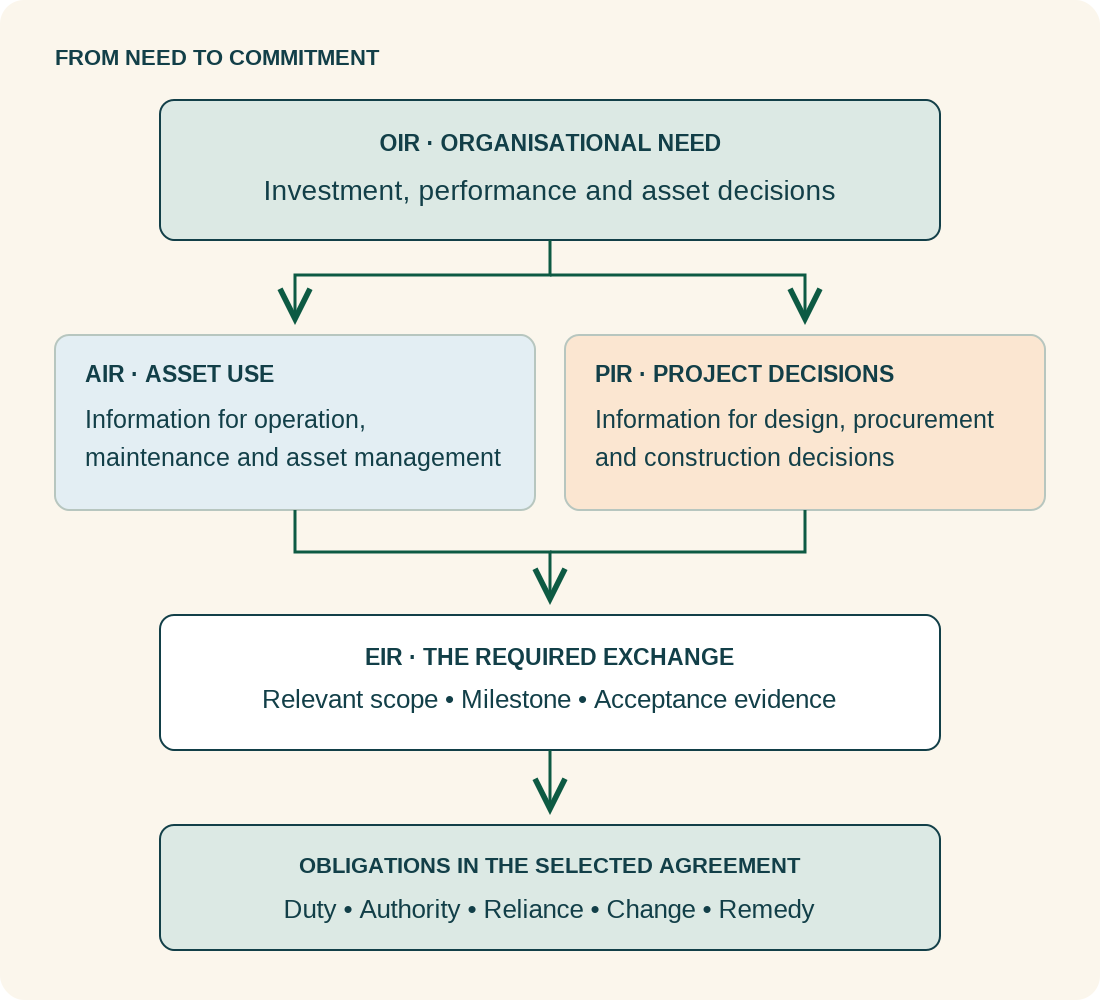 Figure 1. Information needs are translated into appointment requirements before the relevant duties are written into the agreement.
An owner may need a consistent asset classification across its portfolio. A specialist supplying one package contributes the relevant identifiers and attributes; it does not become responsible for the entire portfolio requirement.
UK BIM Framework guidance describes EIR at appointment level and explains their development for contractual incorporation. Guidance on developing information requirements
What the EIR must contain
An EIR should give tenderers a sufficiently clear basis to understand the required work, assess dependencies and price their contribution. It must cover the information needed during the appointment as well as the final records.
| Requirement | Particulars to establish |
|---|---|
| Purpose and scope | Decisions or uses, assets, systems, interfaces and exclusions |
| Information content | Required geometry, attributes and supporting documents at each milestone |
| Timing and dependencies | Exchanges, prerequisite inputs, review periods and owner-provided resources |
| Information standards | Naming, classification, identifiers, coordinates, units and data structures |
| Coordination and exchange | Federation, interface reviews, issue procedures and CDE workflows |
| Formats and compatibility | Required formats, versions and tests relevant to the receiving use |
| Quality and acceptance | Checks, evidence, criteria, exceptions and handover requirements |
| Security and access | Sensitivity, sharing restrictions, protection and continuity requirements |
Level of Information Need should follow purpose and timing. Installed serial numbers cannot normally be confirmed during concept design. Fabrication geometry should not be demanded before the relevant specialist input is available.
A useful test is whether every requested field, model element and document has a purpose, a responsible source and a point when it can be known. Requiring more information than the project can use or verify increases the obligation without necessarily increasing value.
Example: information required before fabrication
Suppose the project needs coordinated information for a building-services package before fabrication is released.
The EIR should identify the package and interfaces, the required geometric and non-geometric content, the exchange format and the relevant milestone. It should specify the evidence required: applicable clash and clearance checks, recorded resolutions, and any exceptions that must be authorised.
“Provide coordinated MEP models” is insufficient because it does not establish these particulars. “Zero clashes” is also insufficient if the review ignores maintenance access, installation allowances or unresolved design decisions.
This example concerns a construction decision. Asset records, quantities and other information exchanges require the same discipline, with particulars appropriate to their own use.
From EIR to contractual obligation
The EIR describes the required exchange. The contract gives it effect through allocated duties, rights, authority and consequences.
The drafting task is to identify which provisions are needed and place them in the relevant parts of the selected agreement. A requirement for coordinated information may affect scope, design responsibility, programme, review, reliance, changes and correction.
| Requirement or issue | Contractual provision needed | Typical location |
|---|---|---|
| Produce the defined package information | Duty to produce and submit against the identified requirements | Scope and deliverables |
| Integrate discipline and specialist inputs | Allocated coordination and interface duties | Design and contractor obligations |
| Submit before the release decision | Milestone, dependencies and review periods | Programme and administration |
| Demonstrate compliance | Checks, evidence, rejection and correction | Quality and acceptance |
| Use the result for fabrication | Identified status, purpose and limits of reliance | Use of information and document status |
| Resolve a change affecting cost or time | Authorised instruction and change mechanism | Variations and claims |
Contract wording and incorporation
Detailed particulars may remain in an incorporated EIR or schedule. The agreement should identify the applicable documents and revisions and govern how they change. It need not repeat every technical field.
An initial production clause might read:
The [Appointed Party] shall produce and submit the package information identified in Schedule [X] at the stated milestones. Each submission shall include the checks and coordination evidence specified in that Schedule. Review, correction and resubmission shall follow clause [Y].
This establishes a duty to produce and submit. It still needs the provisions governing design responsibility, decisions, permitted use, dependencies and consequences. Those provisions complete the obligation across the agreement.
The drafter should test whether the selected party has the inputs, control, resources and time to perform the duty. Precise wording can still allocate work to a party unable to fulfil it.
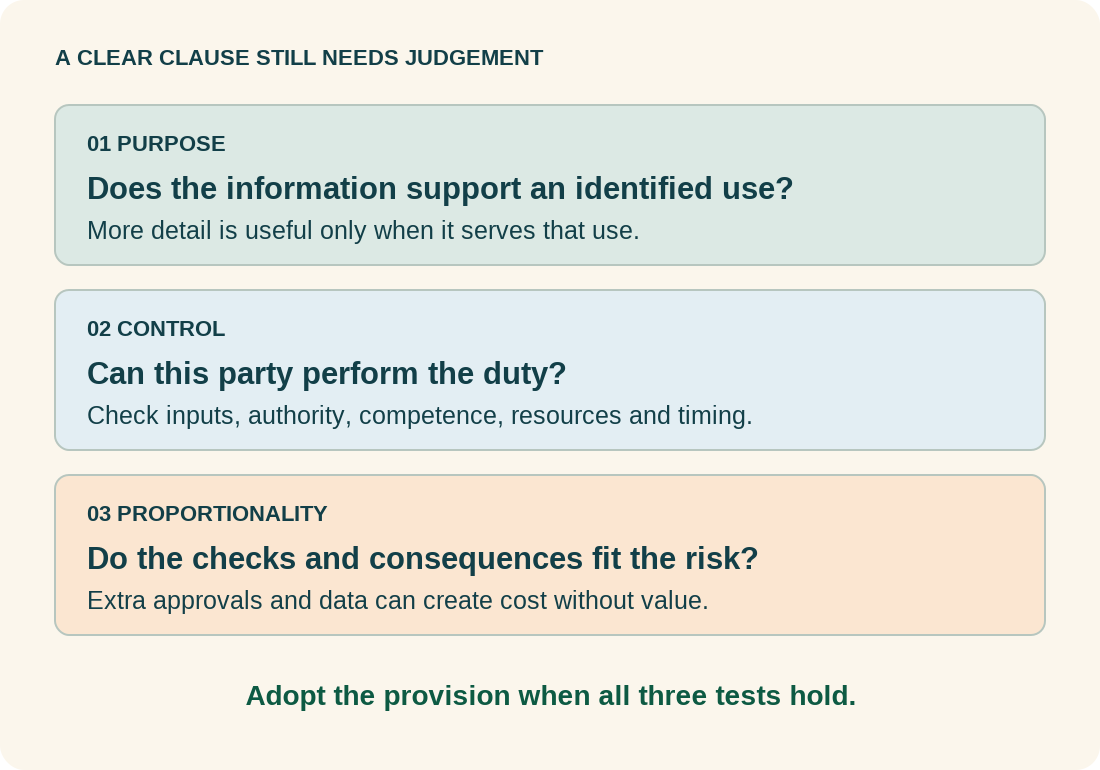 Figure 2. Assess the proposed obligation as well as the clarity of its wording.
The digital-delivery provisions required in the contract
The following subjects provide a framework for selecting provisions. They must be reconciled with the existing agreement rather than treated as an independent contract operating alongside it.
Contract documents and precedence
Identify the EIR, information standards, schedules and required plans. Define their contractual status and resolve their relationship with drawings, specifications and conditions.
A blanket rule that the federated model always takes precedence can create unintended consequences if its content, revision or authorised use is unclear. Equally, making every model subordinate or “for information only” can defeat an intended construction use.
Contract families provide different mechanisms. NEC4, for example, addresses information modelling through Option X10 and Information Model Requirements within the Scope. NEC information-modelling practice note
Roles, design responsibility and coordination
Allocate authorship, information management, technical coordination, checking and decision authority separately. Specify who resolves interfaces and who can instruct a change.
A platform administrator does not acquire design authority by controlling access. A contractor receiving design models does not automatically acquire every design obligation. Conversely, preserving design responsibility should not remove expressly agreed checking or discrepancy-notification duties.
Information delivery and the CDE
Define the required exchanges, updates and records. Establish who provides and pays for the Common Data Environment, administers permissions and maintains the agreed history.
State which actions constitute notices, instructions, reviews or approvals. Closing an issue in a platform is not necessarily authorisation to alter the work.
Formats must serve identified uses. IFC provides a vendor-neutral exchange standard, but naming it alone does not define the required content or prove successful exchange. Specify the relevant version and validation arrangements. buildingSMART IFC guidance
Review, acceptance and correction
Define checks, evidence, reviewer, response periods, acceptance criteria and correction procedures. Distinguish acceptance of an information exchange from technical design approval and authorisation to proceed.
For the fabrication example, a model health check alone cannot establish readiness. The review must address the relevant interfaces, required decisions and outstanding exceptions.
Requiring owner approval of every routine update may create unnecessary delay. The review level should reflect the consequences of error and the reviewer’s capacity. Percentage-completeness targets must not conceal missing critical information.
Model status and permitted reliance
Identify which information, revision and status can support which purpose. Information suitable for coordination may contain provisional selections and remain unsuitable for fabrication.
Specify how recipients report inconsistencies and how they are resolved before affected work proceeds. Avoid requiring unrestricted reliance while disclaiming all responsibility for the information being supplied.
Ownership, licences and permitted use
Establish the rights required for delivery, operation, maintenance, future modification and agreed sharing. Distinguish project contributions from pre-existing libraries, methods and other intellectual property.
Full ownership of every contribution may be unnecessary. An appropriate licence may meet the owner’s needs. A licence that prevents necessary operational modification or system migration may be too narrow. The required rights should follow the intended use.
Security, confidentiality and continuity
Address access restrictions, confidential information, approved sharing, incident notification, backup and recovery as appropriate to the information and risk.
Define records and transfer arrangements on completion, suspension and termination. Requiring universal access can help coordination while exposing information that particular recipients do not need.
Changes, payment and remedies
Changes to information content, exchanges, software arrangements or review requirements can affect work, cost and timing. Identify who can instruct them and which variation and notice procedures apply.
If information delivery affects payment or completion, state the relevant conditions. A minor administrative omission and missing safety-critical evidence may justify different consequences.
Allocate correction duties, liability, indemnities and insurance consistently with the underlying obligation. Requiring absolute accuracy can create a different exposure from a reasonable-care duty. Merely naming an insurance policy does not establish that the imposed risk is covered.
The agreement’s existing claims and dispute provisions should also govern information-related disagreements, with any adaptations made deliberately. The selected form and applicable law determine the effect of the completed wording.
The same requirement written for different contracts
Return to the requirement for coordinated services information before fabrication. Its purpose remains the same. The contractual duty changes with the parties’ control, scope and authority.
The following excerpts illustrate that allocation. Bracketed particulars and the surrounding provisions must be completed for the selected agreement.
Design–build
The design-builder may be responsible for integrating design and construction information within its agreed scope.
The Design-Builder shall coordinate the design and specialist information for the packages identified in Schedule [X] and submit the required interface checks and decision records before milestone [Y]. Information shall be used for fabrication only in accordance with the status and release requirements in Schedule [Z].
This connects the information exchange to the design-builder’s integration duty. Owner-retained design and separately supplied information still require identified inputs, review duties and dependencies.
Drafting judgement. A single point of responsibility can simplify coordination. Extending it to an unconditional guarantee of all owner-provided information creates a different risk allocation and should not occur through vague wording such as “verify everything.”
Design–bid–build
Separate appointments need compatible obligations. The designer’s duty to coordinate design and resolve design interfaces should connect to the contractor’s construction and specialist-information duties.
Designer’s appointment
The Designer shall coordinate the design interfaces allocated to it in Schedule [X], issue the required information at the stated milestones and respond to notified design discrepancies through clause [Y].
Construction contract
The Contractor shall coordinate the fabrication and installation information allocated to it in Schedule [X] with the issued design information. Unresolved interfaces shall be notified through clause [Y] before the affected package is released for fabrication.
The owner must ensure that the exchanges and response periods match across both appointments. Any contractor design duty must be separately identified.
Drafting judgement. Clear responsibility boundaries are useful only if information can cross them. Excluding every contractor duty concerning design information can also obscure its agreed review, interface or notification work.
EPC and turnkey
The coordination duty may need to cover engineering, suppliers, fabrication, installation and commissioning within the contracted scope.
The Contractor shall integrate engineering and supplier information for the packages identified in Schedule [X]. Before the relevant fabrication milestone, it shall submit the specified interface checks and approved decision records and maintain traceability to the subsequent installation and commissioning information.
The scope should identify excluded or owner-supplied packages and the information dependencies they create.
Drafting judgement. Comprehensive integration does not require every proprietary supplier file. Specify the usable information and rights needed for the contracted purposes; require native content where it adds necessary capability.
IPD and alliance agreements
An integrated agreement may provide joint governance and shared commercial incentives. Individual production duties and decision authority still need to be explicit.
Each Participant shall produce and check the information allocated to it in Schedule [X]. Cross-package matters requiring a project decision shall be referred to [designated body] within [period]. The decision record shall identify the authorised resolution, responsible actions and release conditions.
The agreement must determine how costs and consequences enter its defined risk and reward arrangements. Shared model access does not itself create pooled liability or a waiver of claims, and IPD and alliance forms should not be assumed to have identical provisions.
Drafting judgement. Collective decisions can improve consequential interface choices. Requiring the whole governance body to approve routine corrections can delay production. Delegate ordinary tasks while reserving decisions that need joint authority.
Construction management and specialist packages
Under construction management, the owner may hold separate works contracts. The manager’s obligation to administer coordination must be supported by compatible duties in those contracts.
The Construction Manager shall administer the information exchange and interface-review process in Schedule [X], record unresolved matters and refer decisions to the persons authorised under the relevant appointments.
Each relevant works contract must then require its contributor to provide the specified information, participate in reviews and implement authorised actions.
Drafting judgement. The manager should not be made responsible for a trade’s design merely because it manages the process. The trade’s scope should also remain broad enough to provide the interface information others need.
Specialist subcontracts require the same discipline. Flow down the relevant requirements, inputs and milestones rather than imposing the main contract’s entire information obligation on a party controlling one package.
Supporting schedules and templates
Schedules hold the particulars needed to operate the clauses. The drafting decision is which documents are required, who provides them, their status and how they may be revised.
| Document | What the contract should establish |
|---|---|
| EIR and information standards | Applicable requirements, revisions and contractual incorporation |
| Responsibility matrix or RACI | Production, review and decision roles; relationship to design and legal responsibility |
| Master and Task Information Delivery Plans — MIDP and TIDPs | Required delivery planning, submission timing and consistency with contractual milestones |
| Model Production Delivery Table — MPDT | Element or system authorship and required information at exchanges |
| BIM Execution Plan — BEP | Required response, review and revision procedure and contractual status |
| Risk register and acceptance schedules | Required treatment of dependencies and specified compliance evidence |
Some requirements and schedules must be established for tendering. Other plans are proposed or developed by the delivery team. The contract should distinguish them.
A RACI entry does not automatically amend a liability clause, a risk-register entry does not automatically transfer a risk, and a later BEP does not automatically authorise extra scope. Their effect follows the agreement’s incorporation and change provisions.
A practical drafting workflow
The preceding sections can be applied to each significant information requirement.
- Identify the agreement. Confirm the parties, selected form, scope, design allocation and decision authority.
- Establish the information need. Identify the relevant organisational, asset and project purposes.
- Define the exchange. Specify the content, milestone, dependencies, format and acceptance evidence in the EIR.
- Select the contractual provisions. Map the requirement to scope, responsibility, programme, review, reliance, rights, changes and remedies.
- Write and reconcile the duty. Identify the obligated party and align the wording with the existing agreement and connected appointments.
- Test both failure and excess. Check what happens if information is late, wrong or unusable—and whether the proposed controls impose unnecessary work or delay.
For the fabrication example, test a specific failure: a clash is found just before release, its resolution changes the design and the specialist needs an instruction. Can the contract identify who assesses it, who decides, who updates the information and how the cost and programme effects are treated?
Then test the proposed safeguard. Would an additional owner approval prevent that failure, or merely add a queue? Would more model detail improve the decision, or require information the specialist cannot yet confirm?
Delivery response. After appointment, the BEP and associated responsibility, delivery and risk plans organise compliance. Their preparation belongs to the responding parties. Changes affecting scope, responsibility, reliance, time or cost must follow the agreed contractual procedure.
Conclusion
Information needs explain what the project requires. The EIR defines the relevant exchange. Contractual provisions establish who must perform, how information may be used and what happens when the commitment is not met.
The form of contract changes how those duties are allocated. A design–build integration duty, a designer’s appointment and a trade subcontract cannot rely on identical wording simply because all three involve BIM.
A useful BIM obligation connects a defined information need to a party able to deliver it, within an agreement that makes its purpose, use and consequences clear.
Good drafting also tests the proposed obligation. More information, stronger approvals and greater risk transfer are useful only when they improve the project’s ability to make and carry out the required decisions.